Rainwater Drainage Planning in Hawthorne: Reducing Splashback Near the House
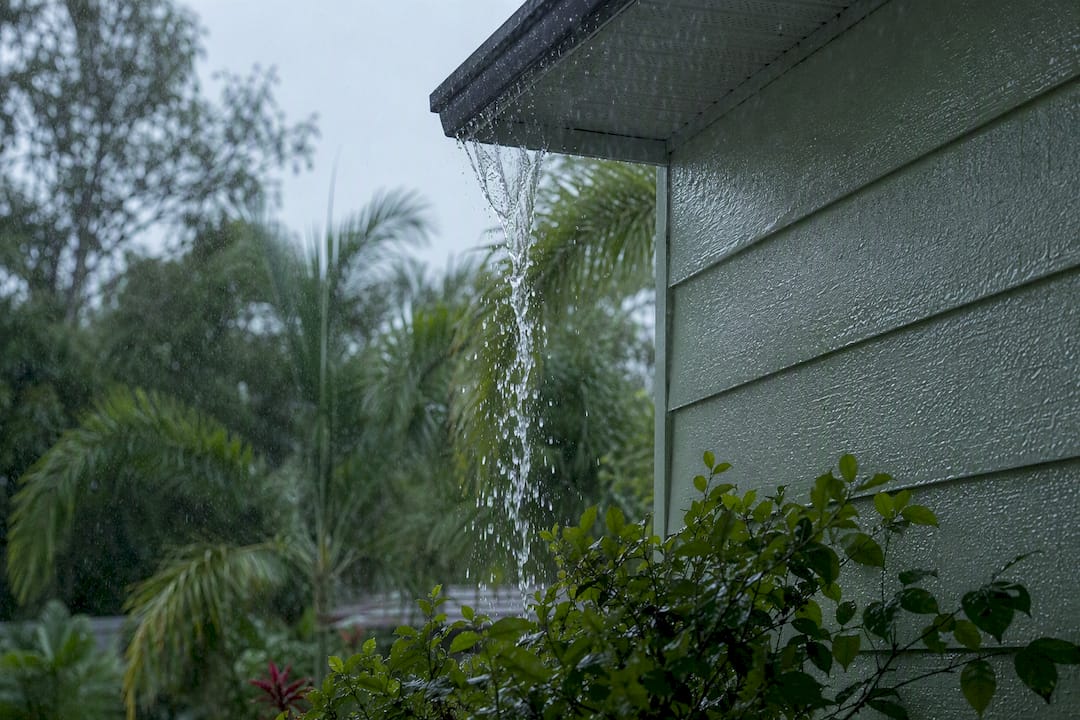
Splashback looks minor until you live with it through a Florida rainy season. The first hard storm hits, water spills off the roof edge or blasts out of a downspout, and suddenly the lower siding is speckled with mud, the soil line along the house is gouged out, and the area near the foundation stays damp longer than it should. In Hawthorne, that problem tends to show up fast because the broader Gainesville area shares the same pattern many North and Central Florida homeowners know well, heavy summer rain, tropical-storm season, high humidity, and runoff that can go from manageable to messy in a hurry.
The frustrating part is that splashback is often a symptom, not the root problem. It can point to gutters that are undersized for the roof area, gutters that are clogged, downspouts that dump water too close to the wall, or a drainage path that simply was never thought through after installation. Sometimes the gutter itself is fine and the discharge is the issue. Sometimes the discharge is fine and the blockage is up above. Good rainwater planning means following the path of water from the roofline all the way to where it lands and moves away.
That sounds simple. In practice, it takes judgment.
Why splashback deserves more attention than it gets
When rain hits the soil hard enough near the house, it throws fine dirt onto whatever sits above it. That may be siding, trim, masonry, a porch slab, or even the lower edge of a screen enclosure. If the area stays wet, you also end up with more staining, more cleanup, and more wear on the strip of ground that should be acting as a stable buffer. Homeowners often focus on the cosmetic side first because that is what they can see from the driveway. The dirt marks are obvious. The washed-out mulch bed is obvious. What is less obvious is how often those visible signs come from water concentrating in one place over and over.

In Florida, concentrated runoff has another consequence. Leaves, pine needles, acorns, and yard debris do not just sit where they land. Once runoff starts moving them, they can collect in gutters, downspouts, and storm drains, or wash toward places you do not want them to go. UF/IFAS has long stressed keeping that material out of gutters and drainage paths, not just for maintenance, but because stormwater can carry organic debris into waterways. In neighborhoods with mature live oaks or pines, that matters more than many people realize.
So if your goal is reducing splashback near the house, the answer is rarely just “add a splash block and hope.” Sometimes that helps. Often it does not solve enough on its own.
Start at the roof edge, not at the mud line
A lot of drainage mistakes happen because the homeowner stands beside the flower bed, sees the muddy area, and starts fixing the bed. The real work usually starts above eye level.
The first question is whether the roof runoff is being captured consistently. If water is jumping over the front lip during hard rain, the issue may involve gutter capacity, debris buildup, or the angle at which water is entering. If the gutter captures water but the downspout dumps too much into one small zone, you will still get splashback, just lower down.
This is where the phrase gutter sizes for Florida homes actually matters. Not as a sales line, but as a planning question. Florida storms can deliver intense rainfall over a short period, and the right sizing depends on roof area, roof shape, and how water concentrates into valleys and edges. A small run on a simple roof is one thing. A long eave fed by a large section of roof is another. It is not wise to guess. Florida building requirements do expect gutters and downspouts to be sized and discharged in accordance with applicable code, and they also require proper fastening and approved materials.
That means if you are seeing repeated overflow, especially in the same spots, it is worth stepping back and asking whether the system was sized appropriately to begin with, or whether conditions changed over time because debris reduced the usable capacity.
The Florida debris problem is not a small detail
If you live around pines or oaks, gutter performance is not just about rain. It is about what the rain is trying to move.
Pine needles mat together. Oak leaves can form a wet layer that blocks outlets. Acorns, twigs, and roof grit build on top of that. A gutter that looked perfectly adequate in spring can behave very differently once summer storms start dropping debris into it and pushing that debris toward the downspouts. UF/IFAS guidance for storm prep specifically calls out clearing needles, leaves, and other debris from roofs and gutters, and that advice lines up with what contractors see every year. During one of those hard afternoon storms, a partially clogged system often fails all at once, not gradually.
That is why gutter cleaning Fruitland Park FL or any other local search phrase tends to spike seasonally. People wait until they notice overflow, but by that point the dirty stripe on the wall or the trench in the mulch bed is already there.
For homeowners dealing with pines, the question of gutter guards for pine needles Florida comes up quickly. Guards can help in some situations, but they are not magic and they do not remove the need for maintenance. Needles are particularly tricky because they can bridge, mat, or collect on top depending on the guard style and roof conditions. What matters most is choosing a system that suits the type of debris around the house and being realistic about upkeep. If a guard reduces cleaning frequency but still allows runoff to enter freely during heavy rain, that may be worthwhile. If it creates a false sense of security while debris accumulates elsewhere, it is not a fix.
Downspout discharge is where many splashback problems are won or lost
A well-functioning gutter can still feed a bad drainage setup. I see this all the time in principle: water gets collected nicely from the roof, then all of it is released right beside the foundation in one concentrated stream. The owner says, “But the gutters are working.” They are, up to a point. The drainage plan is not.
The local keyword downspout drainage Newberry FL gets at a real issue across this part of the state. It is not enough to attach a downspout and call the job complete. You need to think about where that water lands, how fast it lands there, what surface it hits, and where it can travel next without eroding soil or bouncing back onto the house.
Sometimes reducing splashback is as much about energy as volume. Water dropping from a downspout elbow or outlet carries force. If it lands on bare soil, thin mulch, or a hard surface angled back toward the house, you get mud spray. If it lands in a stable area with a managed path away, the problem eases. The fix might involve changing the discharge point, controlling the landing area, improving maintenance, or redesigning part of the system so less water concentrates at a single corner.
This is also where people underestimate the effect of one trouble spot. You do not need a whole-house failure to create an ugly mess. One clogged outlet or one poorly placed downspout can create the majority of the visible staining around an otherwise decent system.
Material and profile choices matter, but not for the reasons people first think
Homeowners often begin with appearance. They ask whether K-style gutters Lady Lake FL look better on a certain facade, or whether seamless gutters Ocala FL are worth the upgrade. Those are fair questions. But from a drainage standpoint, the key issue is how well the system handles real runoff and how reliably it stays in service through humid, storm-prone conditions.
Florida code language expects exterior gutters and leaders to be made of metal or approved plastic and secured with corrosion-resistant fasteners. In practice, that means material choice is not purely cosmetic. Durability matters. Secure fastening matters. Resistance to weather exposure matters.
That is part of why aluminum gutters Central Florida remain a common discussion point. Aluminum is widely used because it suits the climate well and avoids some of the maintenance concerns that come with other materials. Whether it is the right choice for a given house depends on installation quality, fastening, and the rest of the drainage plan, not just the metal itself.
Likewise, seamless construction can reduce leak points along long runs, which is one reason homeowners asking about gutter replacement Gainesville FL often hear it mentioned. Still, no gutter style or material can compensate for chronic clogging, poor outlet placement, or ignored maintenance. A premium system installed without a thought for discharge can still create splashback at the base of the wall.
The yard around the house is part of the drainage system
One of the easiest mistakes is treating the gutter as the whole answer. It is only the collection piece. What happens after discharge is inseparable from the result you live with.
If the ground beside the house is bare and compacted, splashback tends to be worse. If the bed is full of loose, lightweight mulch and takes a direct hit from concentrated runoff, that mulch can scatter or wash. If fallen leaves and pine needles are left to pile where water lands, storms can push that debris into a messy berm, or send it onward into drains and low spots. UF/IFAS guidance makes a useful point here: leaves and pine needles can often be used on site as mulch rather than left where runoff will carry them away. That is practical drainage housekeeping, not just yard tidiness.
The goal is not to create a decorative bed that happens to sit under a downspout. The goal is to create a stable receiving area that does not kick mud back onto the house and does not let debris migrate into the drainage path.
In many cases, the visible difference comes from better housekeeping as much as hardware. A gutter may need repair, yes. But if the landing zone below it is littered with organic buildup by mid-summer, you have set up the next storm to fail before it starts.
Maintenance in storm season is not optional
Florida homeowners know the rhythm. Things can look fine in a dry stretch and then fail fast during a week of repeated rain. Summer is especially hard on drainage because moisture and organic buildup work together. UF/IFAS maintenance guidance for stormwater infrastructure specifically notes the need to clean gutters and downspouts as needed and remove organic buildup, especially in summer.
That timing matters. A once-a-year cleaning schedule may be enough in one setting and nowhere near enough in another. A house under heavy tree cover can load up quickly. A more open site may stay clear longer. The point is to match maintenance to actual debris conditions, not to the calendar alone.
Here is a practical five-point inspection rhythm homeowners can use after a strong storm or at the start of the rainy season:
- Look for water marks or mud specks on lower walls and trim.
- Check whether any gutter run held standing debris or overflowed.
- Watch where each downspout releases water and whether it splashes back.
- Remove leaves, pine needles, and organic buildup from gutters and outlets.
- Clear yard debris from the path water takes away from the house.
That is simple work, but it reveals a lot. A recurring stain pattern usually tells a consistent story.
Repair or replacement, knowing which path makes sense
Not every splashback problem calls for a new system. Sometimes a targeted gutter repair Wildwood FL style approach is the smartest move, even if you are nowhere near Wildwood. A loose section, a bad connection, a clogged outlet, or a downspout that was knocked out of position can create disproportionate trouble. If the gutter body is sound and the sizing is otherwise reasonable, repair may restore proper performance.
Replacement enters the conversation when the problems stack up. If more information the system leaks at multiple points, sags, overflows regularly despite cleaning, or was poorly designed from the start, then gutter replacement Gainesville FL becomes a more practical line of thought. A replacement project is also the time to revisit the whole runoff path, not just swap old metal for new metal. That is when profile, material, downspout placement, fastening, and drainage discharge all need to be reconsidered together.
This is also the moment when homeowners start asking for storm ready gutters Florida. That phrase is useful if it leads to the right questions. Are the gutters secure? Are they sized appropriately? Are downspouts discharging in a controlled way? Is the system free of debris? Are fasteners corrosion-resistant and holding properly? “Storm ready” should mean preparation and sound design, not just a marketing label.
What to ask when hiring help
The phrase hiring a gutter contractor Florida covers a lot of ground, and that is part of the challenge. Some companies are excellent at fabrication and appearance but less thoughtful about site drainage. Others understand drainage well but may not communicate clearly about maintenance expectations. The best results usually come from a contractor who can explain what the water is doing now, why it is creating splashback, and how the proposed changes will alter that path.
A good conversation should include the roof collection area, likely debris load, downspout placement, discharge behavior, and material fastening. If the contractor speaks only about color options and linear footage, that is not enough. If they promise that one accessory will eliminate all maintenance forever, be careful. Florida conditions do not work that way.
A few questions are worth asking directly:
- How will this design handle heavy seasonal rain and existing tree debris?
- Are the gutters and downspouts being sized and discharged appropriately?
- Where will each downspout send water once it leaves the roofline?
- What maintenance should I realistically expect during summer and storm season?
- What parts of the current splashback problem are caused by clogging versus layout?
Those questions tend to separate a real drainage discussion from a quick sales pitch.
A sensible plan for Hawthorne homes
If you are dealing with splashback near the house in Hawthorne, the right plan is rarely dramatic. Usually it is a combination of observation, cleanup, and targeted correction. Start by watching the house during or right after a strong rain. See whether the water is escaping at the roof edge, backing up at clogged sections, or discharging too forcefully beside the wall. Clear out leaves, pine needles, and acorns before assuming the gutter system itself has failed. Keep yard debris out of the drainage path so runoff is not carrying it into trouble spots. Then decide whether the issue is maintenance, repair, or replacement.
The houses that stay cleaner and drier through Florida’s wet months are not necessarily the ones with the flashiest gutter package. They are usually the ones where someone paid attention to the whole sequence. Capture the water. Keep the system clear. Fasten it well. Send the runoff somewhere sensible. Respect the amount of debris your trees produce. Recheck everything before the next stretch of storms.
That is what reduces splashback near the house. Not one product, not one trick, but a drainage plan that works from the roofline down.