Planning Seamless Gutter Installation for Tavares Homes Near Lakes and Tree Cover
Tavares homes sit in a part of Florida where water is never an abstract concern. You feel it in the afternoon air, see it in the summer sky, and hear it on the roof when a thunderstorm rolls through with very little warning. Add nearby lakes, mature oaks, pines, and other heavy tree cover, and gutter planning stops being a cosmetic choice. It becomes part of how a house handles daily weather, seasonal downpours, and the constant drip of debris that falls long before storm season peaks.
That is why seamless gutter installation deserves a little more thought than simply matching the trim color and calling it done. In this part of Central Florida, the best results usually come from looking at the house as a drainage system, not just a roofline. The roof catches water. The gutters collect it. The downspouts move it. The yard and surrounding grade have to accept it without turning entrances, beds, and walkways into muddy problem spots.
Homeowners often start the process because they are tired of overflow near the front porch, splashback staining on siding, or soggy spots near the foundation after hard rain. Others start after a repair call when sections have pulled loose, seams leak, or debris buildup has become a recurring chore. In lake-heavy communities and shaded lots, those issues tend to show up faster because moisture and organic debris stick around longer.
Why seamless gutters make sense in this setting
A seamless gutter system is built with long continuous runs instead of piecing together many short sections. Fewer joints usually means fewer places where leaks begin over time. That matters anywhere, but it matters more in a humid, rain-prone region where gutters may see repeated heavy flow during the warm season.
Central and North Florida regularly deal with thunderstorms driven by sea breezes and tropical moisture. Anyone who has lived through a Florida summer knows how quickly a bright afternoon can turn into a hard, noisy rain. Water can come down fast enough to overwhelm weak spots in older systems, especially where multiple roof planes meet or where debris has slowed movement inside the trough.
Seamless gutters are not magic. They still need the right pitch, secure fastening, good downspout placement, and periodic cleaning. But as a baseline, they cut down on one common headache: leak points at repeated seams. On homes with lots of roofline length, that reduction alone can make maintenance easier and performance more dependable.
For homeowners comparing options in nearby service areas, the same reasoning often applies whether the search starts with seamless gutter installation Leesburg FL, seamless gutters Gainesville FL, or gutter installation North Florida. The local weather pattern changes a bit from place to place, but the basic challenge remains the same. Heavy rain plus humidity plus debris demands a well-planned system, not a bare-minimum one.
Lakes change the conversation, even if the roof stays the same
Homes near lakes face a slightly different set of drainage priorities. The roof may be standard, but the surroundings are not. The air tends to stay humid, rainfall can linger in the landscape, and poorly directed runoff can create soft ground and standing water in places where you least want it.
A lot of homeowners think only about catching rain from the roof edge. The more useful question is where that water goes after it leaves the downspout. If discharge lands too close to the house, you can end up with repeated saturation near entry points, planting beds, or hardscape edges. If it drops into an area that already stays damp, each summer storm adds to a problem that never quite dries out.
On lake-adjacent or lake-influenced lots, that is why planning the gutter layout and downspout locations together matters so much. Sometimes the easiest visual placement is not the best drainage placement. A downspout that looks tidy at the front corner may dump water exactly where foot traffic, mulch washout, and soil erosion become ongoing annoyances. A better location might be less obvious at first glance but far more practical over the long run.
This is where an experienced gutter contractor Central Florida homeowners trust can add real value. Good planning is rarely dramatic. It is mostly judgment. Looking at valleys, roof pitch, corners, tree drip lines, and the way the lot handles water after a hard rain. The best installations often look simple because the hard thinking happened before the first section was formed.
Tree cover creates a second job for every gutter system
In neighborhoods with mature live oaks and pines, the challenge is not only rain volume. It is what falls into the gutters between storms. Leaves, acorns, pine needles, and small limbs are common in Florida yards, and they do not have to completely block a gutter to cause trouble. Partial clogging is often enough to slow flow, create standing water in the trough, and encourage overflow at the worst possible spots.
Live oaks are especially notorious for gradual accumulation. One week the gutters look manageable. A few windy afternoons later, you have a mat of leaves mixed with seed litter and twigs. Pines bring a different problem. Needles can travel farther, wedge into corners, and build up around outlets where they act like a filter nobody asked for. Water still enters, but drainage slows until the next strong storm exposes the bottleneck.
Near heavy tree cover, seamless gutter installation should always be discussed alongside maintenance expectations. If the home sits under a dense canopy, the owner needs a clear-eyed picture of what regular care will involve. That may include seasonal clearing, checking downspouts after wind events, and considering whether a guard system would reduce the cleaning burden without creating a different issue.
This is also where local experience matters. Homeowners searching terms like gutter cleaning Leesburg FL, gutter guards Gainesville FL, or gutter cleaning and repair Ocala FL are usually responding to a familiar cycle. Debris falls. Water backs up. Someone climbs a ladder or calls for service. Then the cycle repeats. Good planning tries to interrupt that loop before it becomes routine.
Gutter guards can help, but only when matched to the debris
Gutter guards are useful in the right setting, but they are not one-size-fits-all. Common styles include brush, foam insert, mesh screen, micro-mesh, PVC covers, and reverse-curve designs. Each handles leaves, needles, and small debris a little differently. On a tree-heavy lot, the question is not whether a guard exists. The question is which type is most realistic for the specific debris load and cleaning habits of the homeowner.
Large leaves are one thing. Pine needles are another. Acorns introduce a third challenge because they can roll, lodge, or collect in ways that affect water entry. Humidity adds another wrinkle. Organic material that stays damp can cling to surfaces, mat together, and break down over time. A guard that performs well in a drier climate or under sparse deciduous trees may not behave the same way under Florida moisture and year-round debris.
A homeowner with tall pines and moderate oak coverage might do well with a system designed to limit needle entry while still allowing strong flow in summer downpours. Another home with broadleaf debris may focus more on shedding leaf matter before it compacts. The point is not to chase the most heavily advertised option. It is to choose a setup that fits the lot and can still be maintained.
That is why gutter guard installation Central Florida homeowners consider should start with a candid look at surrounding trees. Not a sales pitch, not a generic promise of maintenance-free performance. Nothing under heavy tree cover is truly maintenance-free. A good guard can reduce cleaning frequency and help prevent major clogs, but it should be presented as a tool, not a miracle.
For homes in similar conditions farther north, the conversation around gutter guards Gainesville FL often sounds much the same. Humidity, regular rainfall, and mixed organic debris shape what works. A guard that keeps out one type of debris but traps another is not really solving the problem.
Sizing and layout matter more than most people expect
When homeowners think about gutters, they usually notice color and profile first. Installers notice water path, roof area, and concentration points. That difference in perspective matters. Not every section of the house carries the same load. Valleys, inside corners, and long roof runs can dump water into one area far faster see details than a casual walk-around suggests.
On homes with complex roofs, a short section of gutter may receive more water than a much longer run on the opposite side. During a normal shower, both seem fine. During a hard summer storm, the overloaded section starts overshooting, spilling, or stressing the attachment points. This is one of the reasons gutter replacement sometimes disappoints homeowners. The old system was copied exactly, including its weak points.
A careful installation plan looks at where water concentrates, not only where gutter can be mounted. It also pays attention to downspout distribution. One downspout placed for appearance can be less effective than two placed for drainage. That does not mean every house needs more visible hardware. It means balancing appearance with function instead of assuming one should erase the other.
In communities around Tavares, Leesburg, Gainesville, Ocala, and The Villages, homes vary a lot in roof design and lot layout. A low, simple ranch home under dense trees has different needs than a larger house with multiple gables and wide roof spans. Still, the planning principles stay fairly consistent. Rain comes fast, debris arrives often, and weak drainage decisions reveal themselves sooner than owners expect.
The hidden value of repair knowledge during new installation
One of the best signs of a thoughtful installer is that they talk about repair issues before the new system goes up. People sometimes hear “new installation” and assume repair experience is less relevant. In practice, it is often the opposite. Contractors who spend time on gutter repair Gainesville FL calls or routine gutter cleaning and repair Ocala FL work tend to know exactly where systems fail in real life.
They have seen corners where water habitually overshoots. They have opened downspouts packed with pine straw. They have found sections sagging because debris sat wet for too long or because water repeatedly pooled where pitch was off. They have seen fascia staining from small leaks that went unnoticed until paint peeled or mildew marked the trim.
That repair perspective sharpens installation decisions. It leads to better fastening choices, better slope adjustments, and better conversations about whether gutter guards are worth adding from the start. It also helps homeowners avoid the false economy of doing the bare minimum now and paying for repeated service later.
A solid new system should make future gutter maintenance Florida homeowners deal with more manageable, not more complicated. If an installation looks sleek on day one but is awkward to clean, prone to trapping debris, or set up to dump water into already wet areas, it is not really a successful plan.
What homeowners should notice during a site visit
The most useful site visits are practical and specific. They focus on how the house and lot actually behave, not just on taking quick measurements and naming a price. A contractor who understands lake-adjacent, tree-covered Florida properties should be asking pointed questions about what you have already seen.
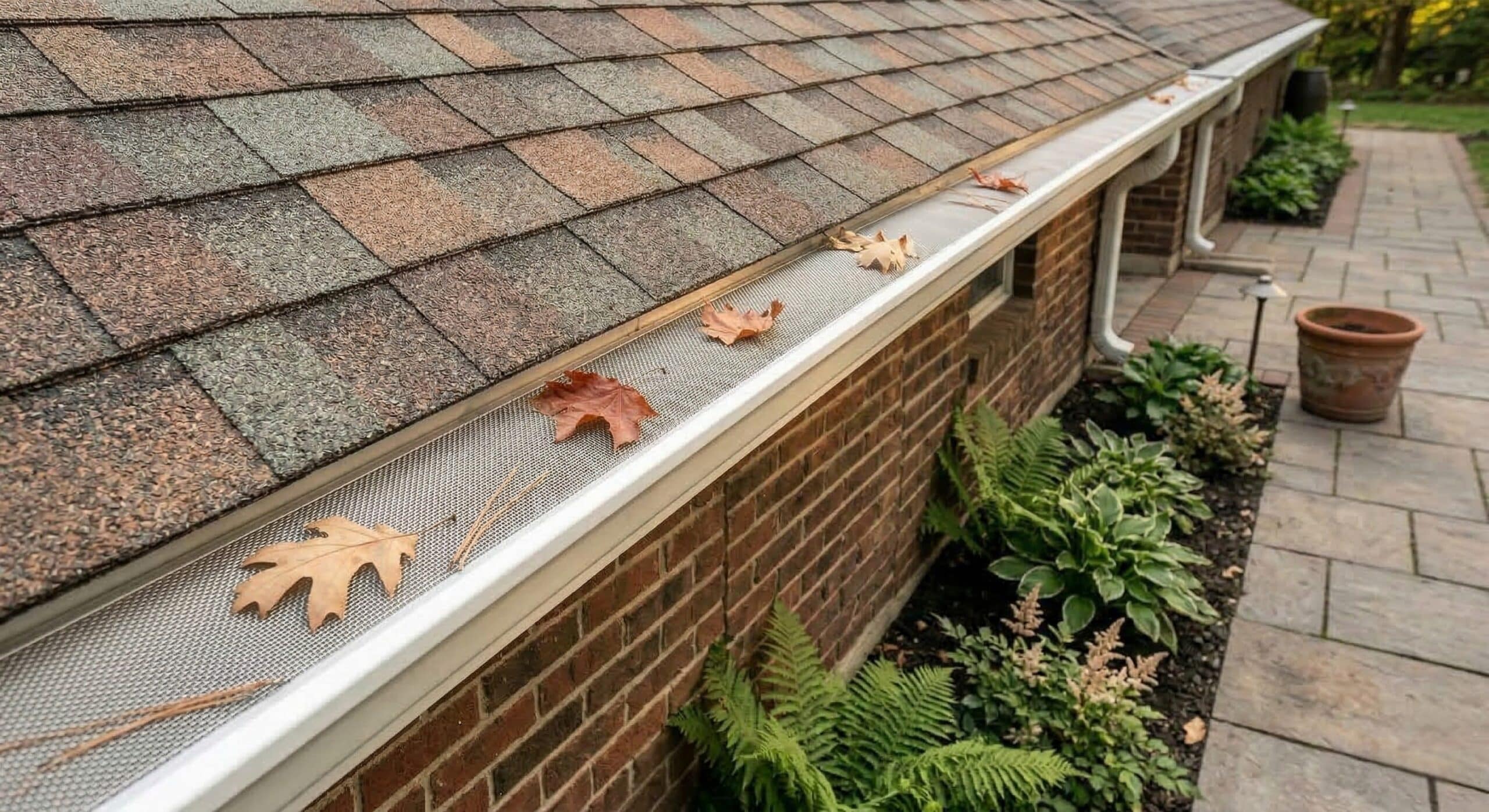
Has water ever spilled over the entry? Do certain corners stay muddy longer than the rest of the yard? Which side of the house gets the most leaf drop? Do pine needles collect in roof valleys before they ever reach the gutter? Have you had to schedule gutter cleaning more than expected during storm season? Small observations like these tell a lot about what the final layout should address.
It also helps if the homeowner can describe what happens during a true downpour, not just routine rain. A system that seems fine in light weather may show its flaws only during strong thunderstorms. That distinction matters in Florida because the warm season often delivers short bursts of very heavy rain rather than a gentle all-day soaking.
If you are comparing estimates, pay close attention to whether each proposal seems tailored to your house or copied from a standard formula. Houses near trees and lakes are rarely ideal candidates for generic planning. The difference between a decent outcome and a great one often comes down to details that only appear when someone takes time to look.
Maintenance still matters after the new gutters go up
Even the best seamless system is not install-and-forget, especially under tree cover. Gutters need occasional inspection. Debris should be removed before it compacts and restricts flow. Downspouts should be checked after major storms or windy stretches that drop extra material from the canopy. If guards are installed, they should still be evaluated from time to time to make sure water is entering properly and debris is not collecting in problem areas.
Florida’s humidity also changes how organic matter behaves. Wet debris does not stay fluffy and easy to remove for long. It mats down, darkens, and can begin to act like a dam. That is when even a slight pitch issue or partially blocked outlet starts causing visible overflow.
For many homeowners, the realistic goal is not zero maintenance. It is predictable maintenance. A good installation reduces surprise problems and makes service more straightforward. Instead of emergency cleaning after every rough storm, you move toward planned upkeep based on the tree load and season.

That is one reason people who first searched gutters The Villages FL or seamless gutter installation Leesburg FL often end up asking broader questions about service after the install. They realize the system has to live through real conditions, not showroom conditions. That means planning for the next few summers, not only the next few weeks.
How to think about cost without getting trapped by the cheapest number
Price matters, but the cheapest bid can be expensive if it ignores runoff patterns, tree debris, or serviceability. On houses near lakes and under canopy, a low upfront number sometimes means corners were cut where homeowners will not notice immediately. Maybe downspout placement was chosen for speed. Maybe debris conditions were not considered. Maybe the system was sized and laid out with appearance in mind but not storm performance.
A better way to judge value is to ask what problems the installation is designed to prevent. Will it reduce recurring overflow? Does it address the corners where water currently concentrates? Was debris load discussed honestly? If gutter guards are proposed, was the guard type explained in relation to your trees, or just presented as an automatic add-on?
Good value usually looks like fewer service calls, fewer wet spots near the house, and less frustration during the rainy season. It may also look like a contractor being willing to say that one extra adjustment now could save repeated cleaning or repair later. That kind of honesty tends to age well.
Planning for Florida conditions, not generic conditions
What works on a lightly wooded house in a drier climate is not always what works in Tavares. Florida weather agencies consistently point to a warm-season pattern shaped by thunderstorms, tropical moisture, humidity, and recurring flooding rain concerns. Those are not edge cases here. They are part of the baseline environment a gutter system has to handle.
Tree debris is equally local in feel. Live oak leaves, acorns, pine needles, and small limbs do not arrive on a neat schedule, and they do not need a named storm to create a clog. They build up gradually, then show their impact all at once when the next strong rain hits. That is why planning seamless gutters for this area has to blend drainage design with debris management.
When homeowners approach the project with that mindset, decisions get easier. Seamless construction makes sense because fewer seams reduce leak opportunities. Thoughtful downspout placement matters because water has to go somewhere useful. Gutter guards can be smart if they are selected for the actual tree cover, not for marketing claims. Ongoing maintenance remains part of ownership because Florida’s combination of rain and organic debris never really stops.
A well-planned system should feel almost boring after installation. Water moves where it should. Overflow becomes less frequent. Cleaning becomes more manageable. The house dries out more evenly after storms. On a Tavares property near lakes and trees, that kind of quiet performance is exactly what you want.